
Keizer City Directory Collections
Keizer relies on a regional historical shelf rather than a verified Keizer-only run. The Salem Public Library historic-property research route says city directories are available at the library and directs local researchers to related newspaper microfilm, maps, and State Archives tax-roll material. Salem is Marion County's seat, and Salem and Marion County publications commonly provide the regional context needed for an older Keizer address. Check the printed locality coverage for the target edition before connecting an entry to Keizer.
| Historical source | Documented years | Research keeper | Practical access |
|---|---|---|---|
| R. L. Polk Salem & Marion County directories | 1892, 1893, 1896, 1902, 1907-08 through 1955 in selected runs | Salem Library research context | Verify the volume and locality coverage before visiting |
| Reverse directory | 1932 forward, where available | Salem Public Library | Address-to-listed-occupant research at the library |
| Oregon Historical Records Index | Varying historical series | Oregon State Archives | Online discovery index, then retain the series citation |
| Marion County Records collection | 1849-1976 collection scope | FamilySearch | Account or image-group limits can apply |
The cited Polk dates document publication references, not a promise that each issue is on a current shelf. Salem Library's online-resources rules also distinguish on-site and cardholder access for some newspapers, maps, and historical resources. Call or consult the library before a long trip, especially when a particular year matters.
Note: A directory entry supports a dated printed association, not current presence, ownership, or a complete household list.
Keizer City Directories at Salem Library
Salem Library offers the most specific verified route for a Keizer-area directory question. Its historic-property guidance separates two search paths. From 1932 forward, an available reverse directory can begin with an address and lead to listed occupants. Before 1932, the published guidance says a name is needed first. That split prevents an unsuccessful address-only search from becoming a guess about an earlier household.
The library's online-resources page lists local-history access options, including in-library access for Ancestry Library Edition and access limits for some Oregon historical newspapers and Sanborn maps. The main library is at 585 Liberty Street SE, Salem, Oregon 97301, and its listed telephone number is 503-588-6315. Bring the year, spelling variants, and an address form if one is known. Staff and the source itself can then help identify the appropriate volume or microfilm route.
Willamette Heritage Center's local-history holdings provide useful regional context for what may accompany a directory search.
Use historical collections to locate a dated source, then record the title, year, and page or image reference before drawing a conclusion.
Keizer City Directory Names Before 1932
A pre-1932 Keizer city directory search should begin with the name as printed, then test a small, documented set of local variants. Keizer's City history identifies Keizer, Kizer, Kisor, Kaiser, and Keiser. It also notes KIEZER and KEIZER forms in early census material. Keep each form separate in the research notes. Similar spellings are leads to check, not proof that two listings identify the same person.
Once a name is found, preserve the directory year, page or image location, address form, and any initials exactly. The City of Keizer history supplies the spelling context; it does not establish a relationship among people with similar surnames. For the early land and tax setting, the Oregon State Archives Marion County inventory helps identify custody and series before a request is made.
Reading a Keizer City Directory Entry
Directory shorthand is compact. Willamette Heritage Center's illustrated Roy F. Campbell material shows Salem and Marion directory examples from 1915 and 1928. The entries use a surname, given name or initials, occasional parenthetical spouse information, vocation or organization notation, and res or h followed by a street address. Read every part as it appears in that edition.
| Printed name | Record surname, given name, initials, suffixes, and spelling without normalization. |
|---|---|
| Parenthetical reference | An occasional spouse reference is part of the printed entry, not a current relationship finding. |
| Vocation or organization | Transcribe it as a dated notation rather than expanding it into a biography. |
res or h | These notations introduce the printed street address in the illustrated examples. |
| Edition citation | Keep the directory title, year, locality coverage, and page or image reference with the entry. |
- Reverse directory
- An address-first directory format. Salem Library documents this route from 1932 forward where a reverse volume is available.
- Entry notation
- The abbreviations and compressed wording printed in a volume. Photograph or transcribe them faithfully before interpretation.
- Source citation
- The title, year, locality coverage, page or image, and retrieval details that let another researcher locate the same entry.
Willamette Heritage Center's directory-entry examples show the compact printed style discussed here.
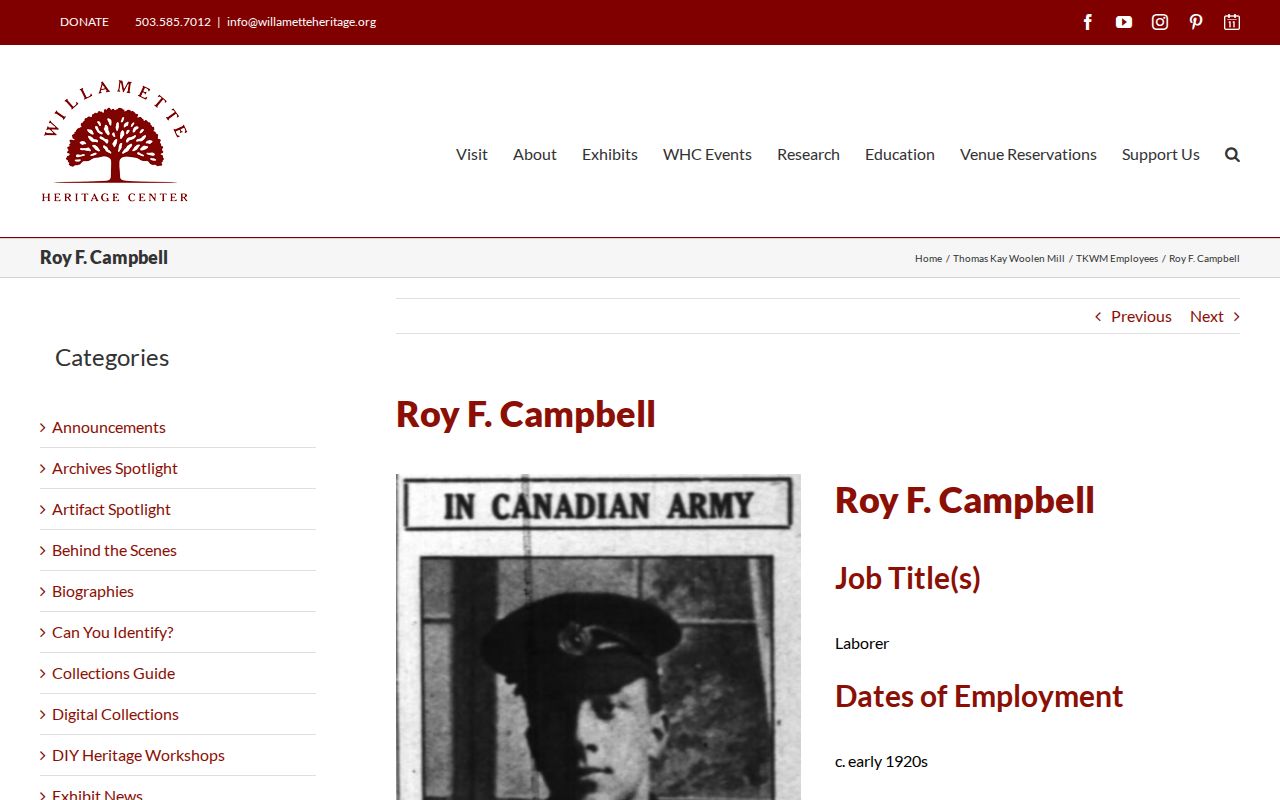
The image is useful for recognizing the layout, but the entry must still be cited by its own edition, page or image, locality coverage, and date.
Do not turn a res or h listing into a title claim or a move date. For a modern address-keyed record, use the County tools described on the Keizer street directory page instead of stretching an older printed entry beyond its year.
Keizer City Directories and Archive Series
Directories gain value when they are paired with a record set that answers a different question. Oregon State Archives land aids describe Marion assessment rolls from 1854 to 1925, assessment and tax records from 1852 to 1943, early land records from 1846 to 1855, and women's property records from 1859 to 1897. These series can help bridge an old legal description or tax name, but they do not turn a printed directory entry into proof of a current address.
OHRI lists Marion historical groups such as census, divorce, estate, guardianship, naturalization, probate, and widow-pension material. Treat it as a discovery index. Capture the series, date, locality, image or citation reference, and source spelling. The FamilySearch Marion County Records collection covers 1849 to 1976 and includes image groups for deeds, grants, mortgages, marriage, probate, and tax material. Some images or groups may have access limits.
| Record milestone | What changes | Useful next source |
|---|---|---|
| 1892 | Earliest cited Polk Salem and Marion County directory year | Check the cited volume and printed locality coverage |
| 1932 | Salem Library documents reverse-directory use from this point forward | Start with the historic address when a reverse volume is available |
| 1955 | Last year in the documented Polk reference list | Confirm a specific later or missing year through the library |
| 1982 | Keizer incorporated, changing the City-records path | For earlier matters, begin with County, State Archives, Salem, or regional sources |
Keizer City Directories With Maps
Salem Library's historic-property workflow points researchers to local newspaper microfilm, Sanborn maps, and State Archives tax-roll material alongside directories. Match the map, newspaper, and directory by date. A street form can change across sources, and a map may identify a place without naming the person printed in a directory. Regional sources should be kept visibly separate from City, County, and State records.
For a directory result near Keizer's early history or its 1982 incorporation boundary, retain the locality term used by the source. The City history notes earlier Keizer spelling forms and the Clear Lake addition. That context helps choose search words for archives. It does not justify changing an address or placing an older listing in a present municipal boundary without dated evidence.
Note: Pair each map or newspaper item with its title, publication date, page or image reference, and the address form it actually prints.
Trace Keizer City Directories Across Years
Use a short, dated sequence rather than a broad search for every mention of a name. The strongest association has two independent anchors, such as a directory year and page plus a matching historic address, or a legal description that can be connected to a County parcel key. When they conflict, record the conflict. A directory, deed, census, newspaper, and tax roll can describe different people or events in the same period.
- Choose a date window and write down the exact name, initials, and Keizer-area spelling variants to check.
- Locate the closest Salem or Marion directory edition and save its title, year, locality coverage, and page or image reference.
- For 1932-forward address work, check whether a Salem Library reverse directory is available; before 1932, begin from the name.
- Compare the printed entry with a same-period map, newspaper item, OHRI result, or archival series, keeping each source date visible.
- State the result narrowly, such as a name printed at an address in a named edition, and mark uncertainty where the identifiers do not agree.
A disappearing name can mean a move, death, an unlisted person, a changed spelling, or an edition gap. It does not resolve itself. If a historic find needs a carefully bounded modern-record check, a Keizer resident lookup should use the appropriate custodian and preserve the difference between a historic listing and a present record.
Keizer City Directory Evidence Limits
A city directory is an editorial publication. It can establish what was printed in a stated edition, not who owns a property, who currently lives there, or an exact move date. Historical source material may also omit people, use initials, or reflect the publisher's local coverage rather than current City boundaries. Keep the edition date beside every address association.
For a street, project, or civic-history question, the Keizer City Archive provides a separate public-document route with keyword, collection, time-period, and start/end-date controls. Its neighborhood-association materials can supply project chronology or agency context. They are civic documents, not a current personal directory.
When a directory result is missing, do not infer around it with protected or restricted sources. Use the library, archive, or a narrow custodian request that identifies the record class and time period. Oregon public-records requests seek existing records, not a new compilation. That approach respects the line between useful family-history research and an unsupported profile of a person.