
How the Keizer Residents Directory Starts With a Known Clue
For a Keizer residents directory search, match the source to the clue instead of starting with an open-ended name search. A current street address can lead to a Marion County parcel account. A dated name and locality can lead to a directory, a historical index, or a narrow recorded-instrument search. A court question belongs with the court, and a current vital-record question belongs with the Oregon Health Authority. Each route has its own access limit, so a no-result in one system does not answer a different question.
- Preserve the exact name or address as printed, including direction, unit, locality spelling, and date.
- For a known Keizer situs address, use the Marion County Assessor Property Search to collect the account and map-tax-lot identifiers.
- Open the same place in the County parcel viewer to confirm the selected parcel and its map context.
- Use the Marion County Clerk, Salem Library, or State Archives route that matches the date and record type.
- Keep source date, retrieval date, and the record’s own identifier together before treating two entries as related.
A source can document an owner field, a printed household listing, a filing party, or an official case reference. It cannot automatically prove a current household or merge two similar names. When the goal is a full address trail, the Keizer by-street guide explains the County parcel handoff in more depth.
Keizer Residents Directory Property Searches Begin With Four Fields
The Assessor’s portal is the practical first stop for a Keizer property reference, but it is not a broad people finder. After accepting its disclaimer, the visible categories are Account Number, Map Tax Lot, Situs Address, and Subdivision. A returned account can show source-date property information including the situs, map-tax-lot, owner and mailing fields, neighborhood, values, and tax summary. The portal says its information updates every 24 hours and carries assessment-roll timing caveats.
| Marion County field | Best Keizer use | Important boundary |
|---|---|---|
| Account Number | Reconnect to a parcel after it is identified | It is an account key, not a resident identifier |
| Map Tax Lot | Bridge a plat or legal description to County mapping | Use the County label shown in the source |
| Situs Address | Start with a known Keizer street address | Keep the directional suffix and unit |
| Subdivision | Search when a recorded plat name is known | Do not substitute it for an address |
The Assessor search interface shown below is a useful reminder that owner-name and ZIP are not visible starting categories. Search the address first, then record the County identifiers that make later requests narrower.
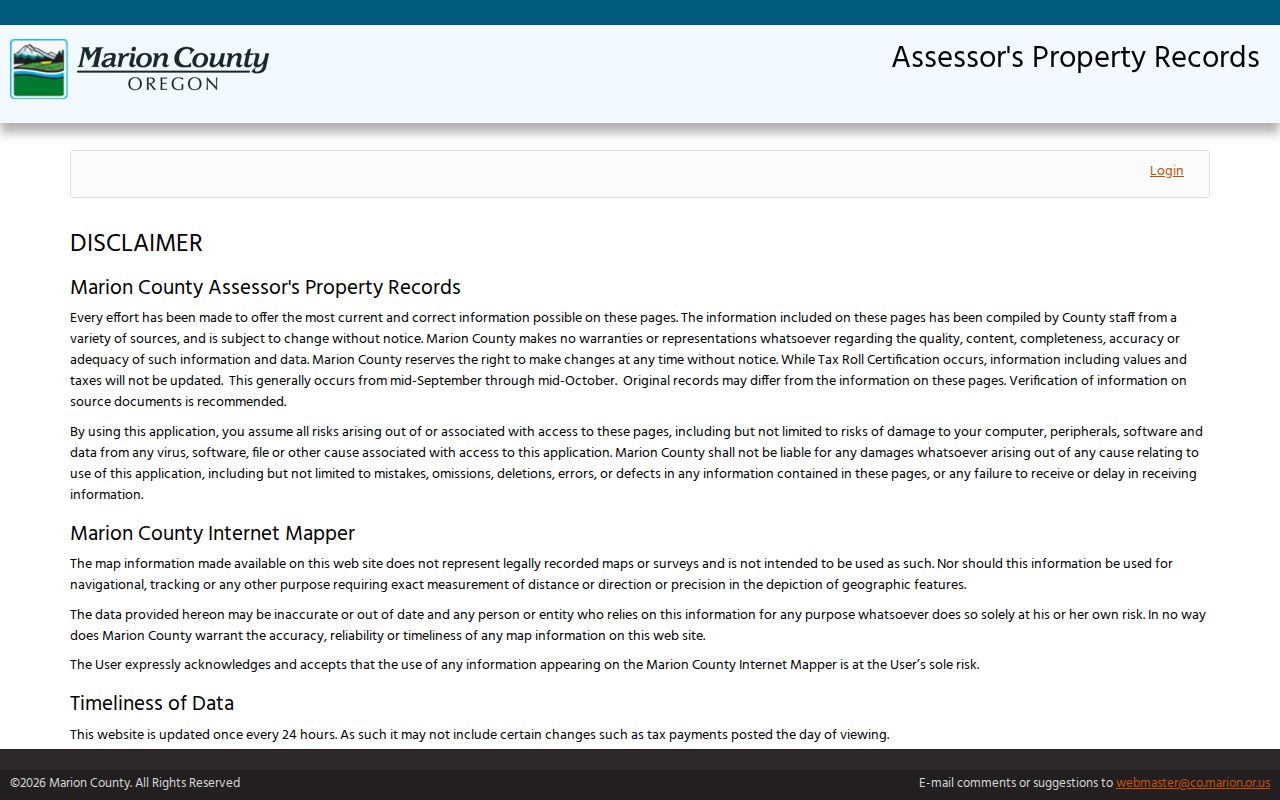
That constraint keeps a Keizer residents directory search tied to a real parcel instead of implying that the County offers a streetwide, name-first, or ZIP-wide resident list.
Keizer Residents Directory Records Offices and Their Jobs
Keizer is in Marion County, and the courthouse-and-property-records hub is Salem. City-created records, County land and election records, Oregon statewide systems, and historical repositories answer different questions. The right office is usually more useful than a broad request because it already holds the existing record, its identifiers, and its access rules.
Marion County Clerk, Licensing & Recording
555 Court Street NE, Suite 2130
Salem, OR 97301
503-588-5225
Marion County Assessor
555 Court Street NE, Suite 2233
Salem, OR
503-588-5144
Marion County Elections
555 Court Street NE, Suite 2130
Salem, OR 97301
503-588-5041
For a non-police Keizer City record, the City Recorder has an online request form. A police report uses the dedicated police request route, not the Recorder form. For an existing County record outside ordinary counter service, Marion County directs requesters to the department’s public-records officer.
Keizer Residents Directory Recorder Requests Work Best When Narrow
Keizer’s City Recorder form asks for a specific description of the record or document, including date ranges. It also asks about commercial purpose, prior City contact, and attachments, and it allows the City to give a fee estimate before work continues. A useful Keizer request names one custodian, one record class, a bounded period, and practical identifiers such as a street address, account number, meeting date, or report number.
Use the Keizer public-records request form for non-police City material. The State framework is the Oregon Public Records Law, ORS 192.311–192.478. It governs existing public records and does not require an agency to create a new compilation. The form image shows why a descriptive, date-bounded request reduces unnecessary routing and review.
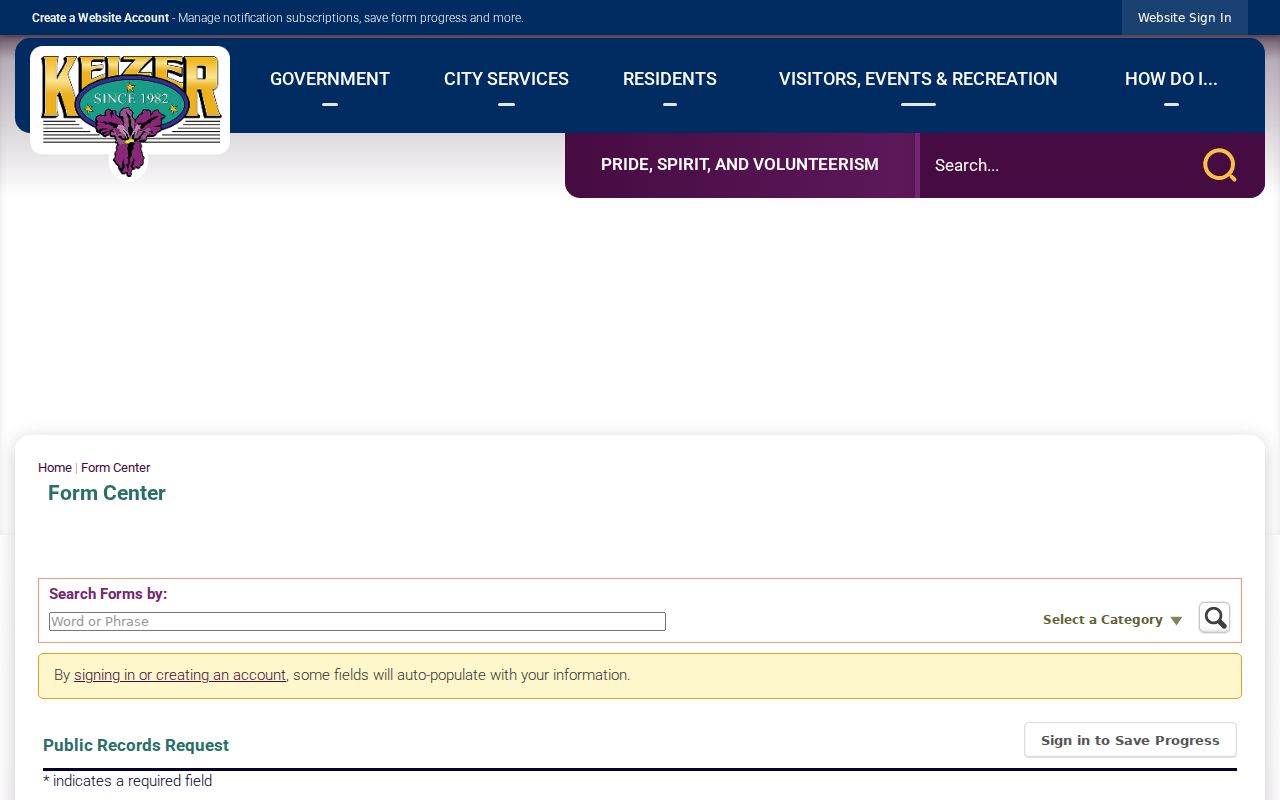
A request for Council material, a permit file, or a City archive item is more likely to be answered cleanly when it asks for the known record rather than every item about a person.
Keizer Residents Directory Deed Research Has a Counter Route
Recorded land instruments can add the legal-description and date layer that a modern address lacks. Marion County’s recording records cover deeds, mortgages, plats, liens, releases, easements, and related instruments. The research file did not verify an unauthenticated public online document index. Instead, the Clerk’s current research sheet directs document researchers to six public terminals in the office and says staff do not search documents by phone.
The Marion County recording research route is therefore the practical fallback when a Keizer parcel, name variant, instrument number, recording date, book/page, or legal description needs to be checked. Printed copies are listed at 25 cents, basic how-to help is available, and staff research charges may apply after the first ten minutes.
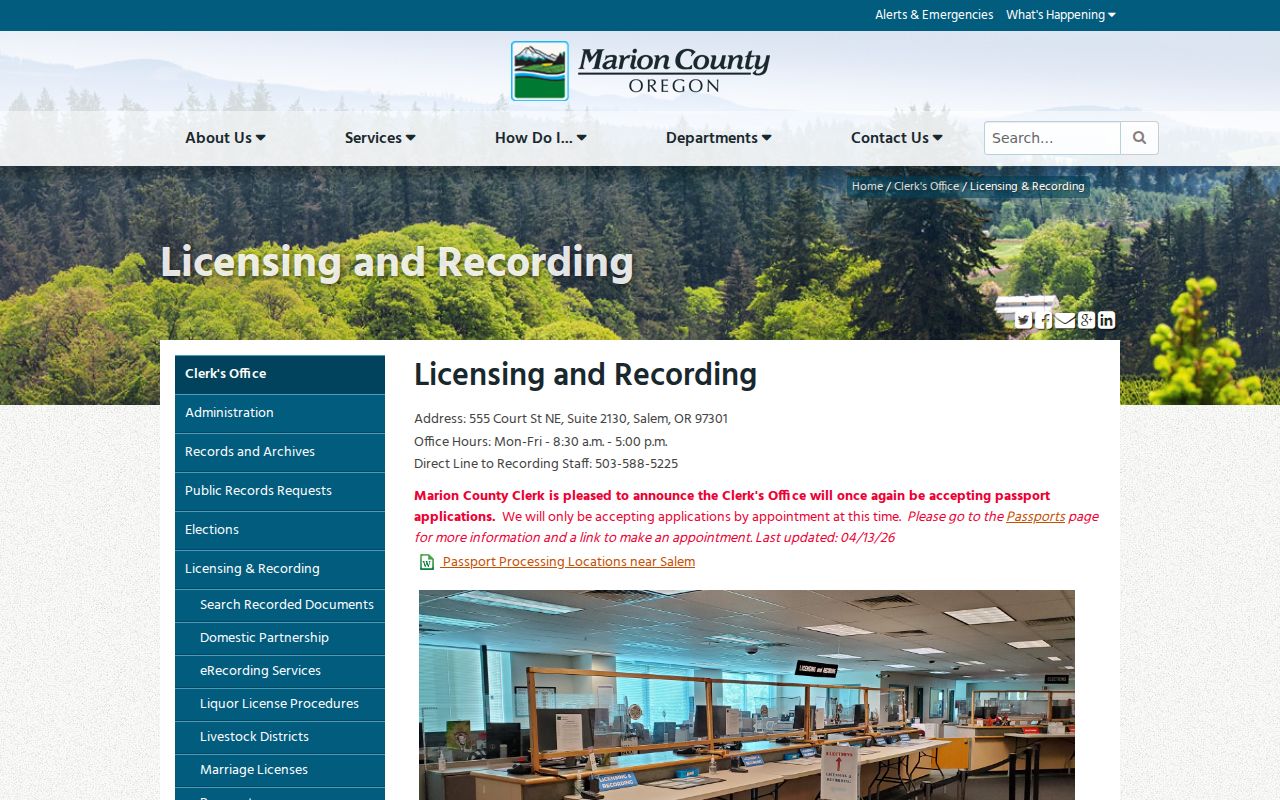
This is an insider detail worth planning around: a well-scoped terminal visit or request is more accurate than promising that a current Keizer deed search can be completed through a public web index.
Keizer Residents Directory Sources You Can Actually Check
Each source in a Keizer residents directory answers a limited question. The table separates property, civic, court, historical, and vital paths so a reader can see what a result can confirm and which access channel remains available when a portal does not provide a public name search.
| Source layer | What it can show | Keizer access route | Limit |
|---|---|---|---|
| Assessor account | Parcel-linked property fields | Address, account, taxlot, or subdivision search | No visible owner-name or ZIP category |
| County GIS | Selected parcel, map, transfer, district, and address fields | Address, taxlot, account, or locator then parcel click | No verified public buffer, export, or ZIP start search |
| Oregon voter systems | A voter’s own registration or a formal list route | My Vote or a voter-list request | CAPTCHA and confidentiality controls apply |
| Recorded instruments | Party and land-transfer context | Clerk terminal, counter, or narrow records request | No public County web index was verified |
| Historic directories | Dated printed address association | Salem Library, historical collections, and archives | It is not proof of a current connection |
Commercial people-finder services may combine material from many dates and sources, but their category labels, refresh cycles, and match logic are not a substitute for a custodian record. Official sources provide the source-native date and identifier needed to check a claim. For a single documented connection, use the Keizer resident lookup workflow rather than treating a broad result as verification.
Keizer Residents Directory GIS Connects a Parcel to Its Map Context
The County’s Assessor’s Property Records map does a different job from the property-search form. Its address locator and partial Situs Address matching can help select a place; Taxlot Number and Account Number are exact categories. After selection, the popup can expose the taxlot, account numbers, plat or subdivision, address components, transfer fields, taxing districts, values, and links supplied by the County.
Start with the Marion County Assessor’s Property Records map, keep a retrieval date, and use manual map pan and parcel clicks for spatial context. Its visible configuration does not establish a one-click resident list, a radius list, or an exportable block roster.
Record terms. A parcel is a mapped land unit; a situs address is its physical-location label; an index points to a record; and a criss-cross directory is an address-led historical directory.
Those terms matter in Keizer because a historic deed may use a legal description while a current property page shows a situs address. County identifiers, not a guessed conversion, make the bridge defensible.
Keizer Residents Directory Archive Material Adds Civic Context, Not a Roster
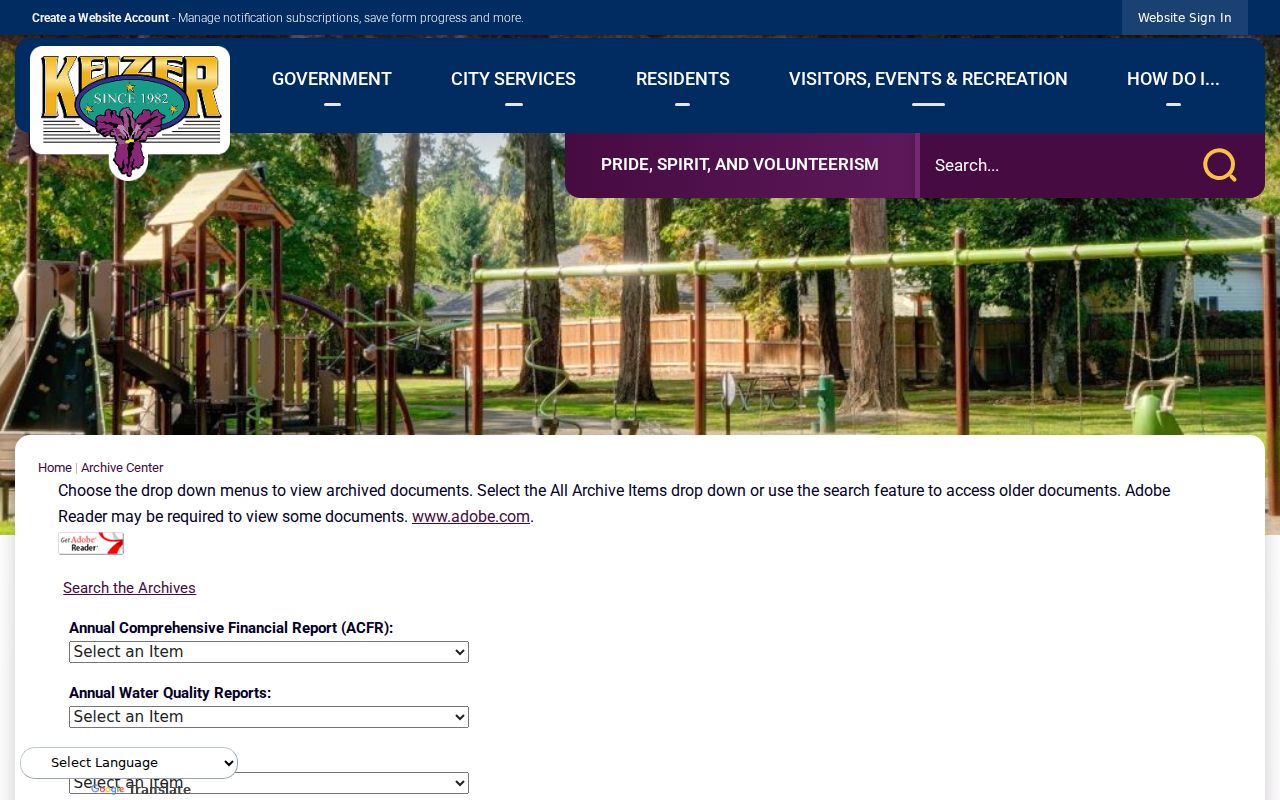
Keizer’s Archive Center is the City’s useful local-history discovery layer. It allows keyword searching, archive-collection selection, a time period, and start and end dates. The City has public materials labeled for GNEKNA, Greater Gubser, Northwest Keizer, Southeast Keizer, and West Keizer. These include agendas, minutes, newsletters, and related civic documents that can help date a street project, meeting, flood issue, park topic, permit matter, or annexation discussion.
The Keizer Archive Center is shown below with the public-document route. Search the exact street form, then try a neighborhood name or a City project term with a date range. The collections are valuable context, but they are not membership lists or current contact directories.
Keizer incorporated in 1982, and Clear Lake joined the City that year. That jurisdiction break is a practical clue: older local material may be in Marion County, State Archives, Salem microfilm, plats, surveys, or historic directories rather than a Keizer City file.
Keizer Voter and Court Routes Have Real Access Limits
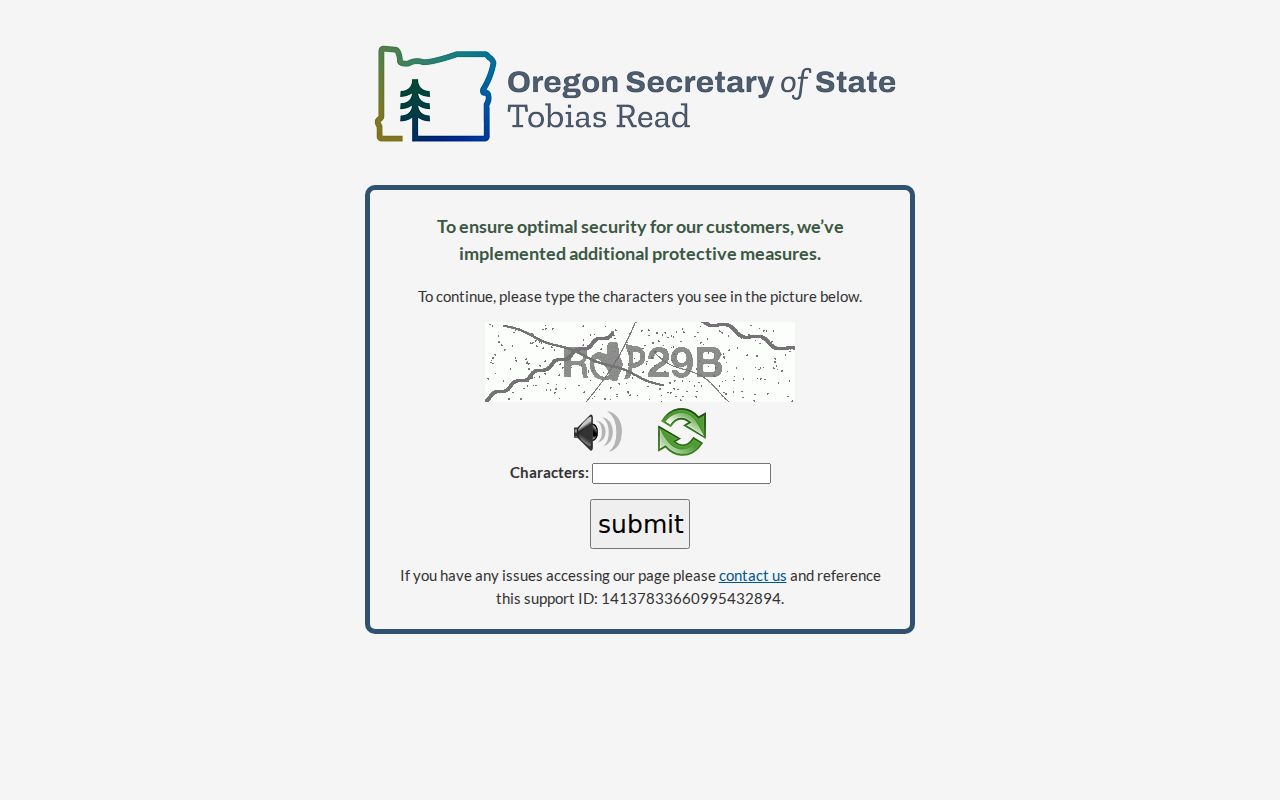
Oregon’s My Vote route is meant for a voter’s own registration services. The live lookup presented a CAPTCHA on the research date, so it should not be represented as a general public name directory. Oregon also provides a formal voter-list request process with its own fields, fees, delivery terms, and confidentiality controls. The voter-file specifications include address and ZIP components, but that does not create a public browse screen.
The Oregon My Vote page leads to the official self-service route. Its access boundary is visible in the captured screen below, and Keizer researchers should not attempt to work around CAPTCHA or protected-address controls.
For courts, the Oregon Judicial Department stated that Online Record Search and Calendar Search were unavailable on the research date. The verified alternative is the Marion Circuit Court terminal and records-request route. Sealed, juvenile, adoption, and other excluded material remains outside a general lookup.
Keizer Vital Records Are Not a Directory Layer
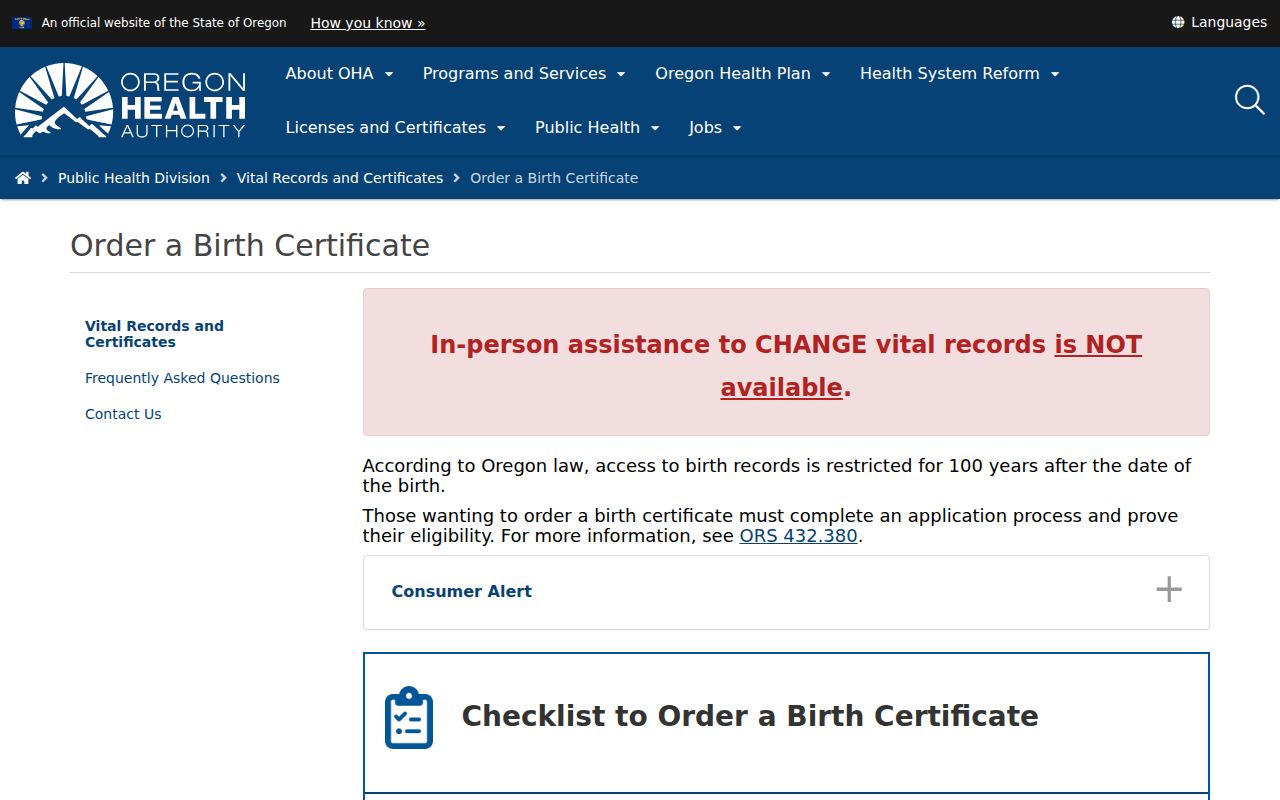
Current Oregon birth and death certificates have defined eligible recipients, identification requirements, and signed-application rules. The Oregon Health Authority Center for Health Statistics is the official route for current vital-record orders; Marion County Clerk handles local marriage licensing and associated local marriage records. Historical material has different archive routes and statutory opening periods, generally 100 years for births and 50 years for other vital-record types.
The Oregon birth-certificate order page illustrates the official order path and its required inputs. Use the eligibility guidance before ordering, and do not treat a current certificate as a shortcut for a Keizer residents directory search.
For historical work, pair a date-bounded directory, archive index, or recorded instrument with the correct vital-record access period instead of trying to infer a relationship from a common name.
Keizer ZIP Details Need a Full Address Check
Official City material shows two different Keizer ZIP uses: City Hall’s physical situs is in 97303, while City material also uses a 97307 post-office-box mailing address. That distinction is useful evidence that mailing and physical addresses are not interchangeable. It does not establish complete postal boundaries or show that every City parcel has either ZIP.
Use the USPS ZIP Code Lookup with a complete delivery address. The Assessor form has no visible ZIP search category, and the GIS viewer returns ZIP only in the address fields after a parcel is selected. For a postal question, let USPS resolve delivery; for a jurisdiction question, use the County parcel and City-boundary sources.
Keizer Historical Directories Need Their Printed Date
Historical Keizer research often runs through Salem and Marion County collections rather than a separate municipal directory shelf. Salem Library’s historic-property guidance identifies reverse directories from 1932 forward, so an address can lead to a printed listing for the relevant edition. Before 1932, begin with a name in the appropriate directory, then corroborate an address with maps or newspapers. A historical listing should always keep its edition year beside the printed entry.
Keizer’s own history identifies Keizer, Kizer, Kisor, Kaiser, Keiser, and early KIEZER or KEIZER spellings. Preserve each form in an archival search log instead of silently merging them. The City Directories guide has the fuller shelf, entry-reading, and year-by-year method.
Keizer Record Searches Must Respect Confidentiality
Oregon’s Address Confidentiality Program and voter confidentiality procedures, including SEL 550, exist to suppress protected address information. A protected, CAPTCHA-gated, sealed, or unavailable result is a stopping point, not a clue to reconstruct from other sources. The same restraint applies to sensitive court material, current vital records, utility data, and DMV personal addresses.
Lawful personal use. Use Keizer records for a bounded, lawful purpose such as family history, an heir matter, civic research, or checking a source. Do not use records or directory material to stalk, harass, intimidate, or harm anyone.
When an official record seems wrong, raise the issue with the office that maintains it. Oregon Public Records Law, ORS 192.311–192.478, concerns records a public body already holds. Under ORS 192.324, an agency generally acknowledges or completes a written request within five business days, then provides the record, a fee estimate, an estimated completion date, or another response under the statute’s process. A defined record class and date range are more useful than asking an agency to create a new Keizer compilation. A dated source, a narrow question, and a custodian confirmation are the soundest way to use a Keizer residents directory.